The old adage, "if these walls could talk" is an appropriate one for the historic districts of Huntsville, where old buildings hold tales of countless heartaches, conversations, dramas, and secrets that the walls have heard over the years.
Almost everyone enjoys driving through historic districts and gazing at timeless beauties, but what's even more enthralling are the seasoned stories passed down from generation to generation. Once transmitted orally by the light of a fireplace or under the beams of the moon, the same legacy continues today on guided history tours hosted by the CVB.
Every spring and fall, the Huntsville/Madison County Convention & Visitors Bureau offers free walking tours led by local guides and focused on the historic districts of both cities. If you plan to visit the area in April or October, save room in your vacation itinerary for these special events.
No tickets or reservations are needed for walking tours. Just bring yourself and your thirst for historical knowledge. To whet your appetite for the tales you may hear, below are a few of Huntsville's most stories homes.

The Weeden House Museum (1819)
300 Gates Avenue SE
Built in 1819, the Weeden House on Gates Avenue is a Federal-style mansion and Alabama's oldest house museum. Named after the acclaimed female artist and poet Maria Howard Weeden, who lived here her entire life, the mansion became a sanctuary for creativity and artistic expression in the post-Civil War era.
Weeden expressed the grievances of the times by painting haunting watercolors of formerly enslaved people in the late 1800s, which became a gesture she used to preserve humanity and establish dignity. The mainstream art world at the time was not recognizing African Americans, so the act of doing this was unheard of. She decorated each room in the home with fine art depicting life in the deep South and portraying the raw, untold stories of the time.
Today, each room of the house museum holds a valuable archive of wealthy Southern life in the 19th century, but Maria's artistic legacy tells a deeper story of social consciousness emerging from aristocratic society in the South.
The Mastin-Batson House (1819)
516 Franklin Street
This two-story vernacular dwelling represents one of Huntsville's earliest architectural experiments. Built around 1819, the Mastin-Batson House showcases an evolution of styles from Federal to Greek Revival to Italianate, revealing how families adapted their homes to changing fashions over decades. The wide, pine floorboards remain original, and the property still includes slave quarters from around 1819, serving as a sobering reminder of the labor that sustained these grand homes.
But its modern story is just as compelling as its antebellum origins. The Batson family's mission was to preserve the home's original character as much as possible, even saving pieces from previous renovations. This Franklin Street gem represents the passionate commitment of modern preservationists who maintain Huntsville's architectural heritage, ensuring that future generations can still walk on those same pine floors that witnessed nearly two centuries of Alabama history.
The Backward House (Late 1840s)
517 Adams Street Southwest
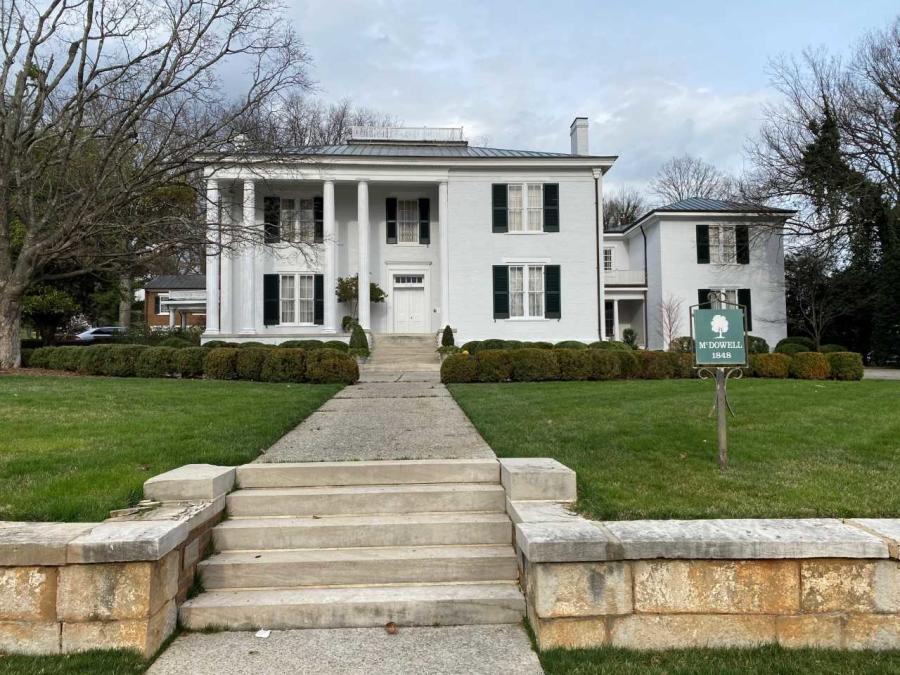
The Backward House is one of Huntsville's most charmingly catastrophic architectural tales. In the late 1840s, William MacDowell had big dreams and even bigger ambitions for his new home. He commissioned builders, drew up detailed plans, hired an overseer, and then set off on the shopping trip of a lifetime across Europe.
Over the course of the next few years, MacDowell wandered the continent, handpicking rare furniture, exquisite fixtures, and housewares to fill his future mansion. Imagine his reaction when he came home and found his grand dream standing with one small, but impactful, mistake. The house had been built backwards, and the part facing the street was meant to be the back porch!
Rather than tear it all down, the MacDowell family decided to live with it. In 1925, they added columns to the street side to give it a more normal front entrance appearance. Even Civil War General Ormsby MacKnight Mitchel found the quirky home suitable enough to serve as his Union headquarters during Huntsville's occupation.
Poplar Grove (1813)
403 Echols Avenue
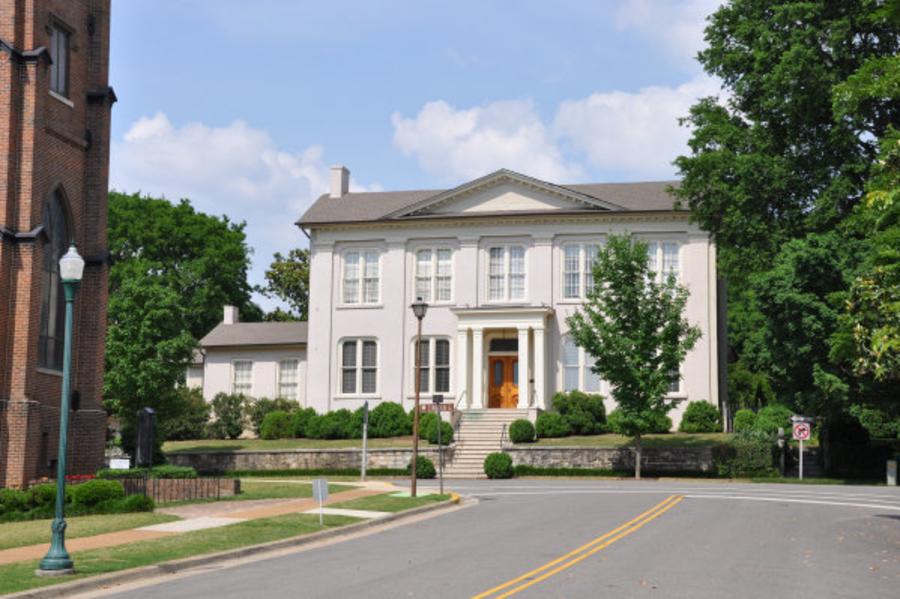
Perched high on Echols Avenue, this 1813 Classical Revival mansion is one of Alabama's first grand estates. LeRoy Pope commissioned the 6,300-square-foot showpiece as the crown jewel of his 160-acre spread, but the grandeur came at a terrible human cost.
The enslaved workers who built Pope's dream home would soon witness it transform into something far darker. Following conflicts like the Fort Mims Massacre, the mansion's elegant rooms became makeshift prison cells for Native American captives and a military hospital. Those same walls that hosted celebrations with five future Alabama governors and President Andrew Jackson also echoed with the suffering of those held against their will.
Today, the University of Alabama in Huntsville uses the mansion as their president's residence, though one has to wonder what memories still linger in those centuries-old rooms.
(Photo credit: Huntsville History Collection)
The Spite House (1813)
311 Lincoln Street
Standing tall with its distinctive, extra-high ceilings (14 feet on the first floor and 16 feet on the second), the Spite House earned its rather pointed nickname for both its impressive architecture and the annoyance it caused.
To understand this story, you need to know about the grand home at 403 Echols Avenue, built in 1813 as the residence of LeRoy Pope, often called "the father of Huntsville." This oldest mansion in the city was strategically positioned on its corner lot, angled to look toward Big Spring Park.
For years, Pope enjoyed his carefully planned vista of downtown Huntsville. But when the house at 311 Lincoln Street was constructed directly between the Pope Mansion and Big Spring Park, its towering height effectively blocked that glorious view.
Whether the obstruction was intentional or simply an unfortunate coincidence, the result was the same: Pope's scenic overlook was gone. The unusually tall house that had stolen his view became known throughout Huntsville as the “Spite House," a name that has endured as a reminder of how one person's architectural ambition can become another's visual eyesore.
The Salem Witch House Replica (1995)
133 Walker Avenue Northeast
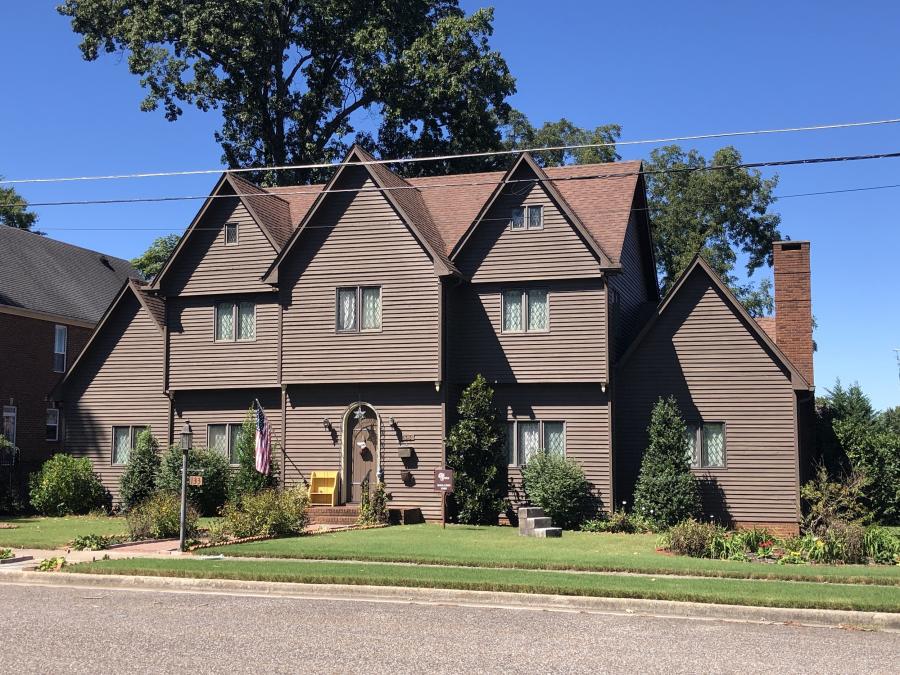
A part of Huntsville's Old Town Historic District, the Salem Witch House presents a remarkable architectural homage to one of America's most haunting historical periods. Constructed in 1995, this building is a nearly perfect external reproduction of the Jonathan Corwin House in Salem, Massachusetts.
A nod to the Salem witch trials of the 1690s, the original Corwin House belonged to Jonathan Corwin, who examined witchcraft accusations and sat on the tribunal that condemned 19 individuals to death. Today, that house remains a direct link to that tragic period and functions as a museum in Salem.
The Huntsville reproduction emerged when Rick and Dale Rhodes visited Salem and became captivated by the historic Corwin House. Moved by this compelling piece of American history, they chose to recreate it, transporting a fragment of colonial Massachusetts architecture and its intricate legacy to Huntsville.
Twickenham Historic District
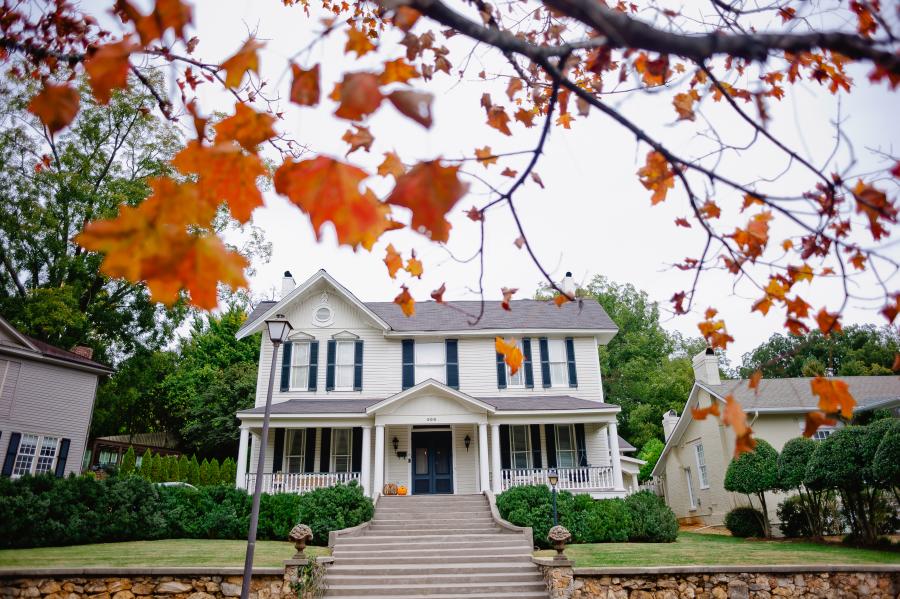
The Twickenham Historic District stands among Alabama's most important architectural and political landmarks. Established in 1814, the neighborhood contains Alabama's highest concentration of antebellum residences, displaying a remarkable variety of architectural styles including Federal, Greek Revival, Gothic Revival, Italianate, Queen Anne, and Bungalow forms.
Many of these distinctive designs arrived in the area around 1818 through Virginia-born architect George Steele, whose vision helped craft the neighborhood's rich architectural diversity. Yet Twickenham's importance reaches well beyond its stunning structures.
In 1819, the district transformed into Alabama's unofficial political center when 44 delegates assembled in Huntsville for Alabama's inaugural constitutional convention. These founding fathers conducted business beyond formal meeting spaces—they resided in these same homes, convening in sitting rooms and at dining tables to deliberate the crucial matters facing the emerging state. Within these historic chambers, statehood was conceived, legislation was debated, and Alabama's governmental foundation was established through private discussions that would shape the state's destiny.